Five Things I've Learned About Modesty, Part 2


And now the last three points in this article, as promised....

3.  Modesty is a form of service.
I understand the temptation to dress immodestly at church, from a girl's point-of-view anyway. You're interested in a guy and this is the only place you see him, so you wear your cutest clothes on Sunday morning, hoping to catch his eye. You don't want to be tempting, you just want to be noticed. Ladies, that is dangerously naive. Christian women have to realize that there is an enemy on the loose who wants to devour our brothers in Christ. He will use every trap and snare available to do that. We can serve and protect our brothers by not letting ourselves be used by the Enemy to gain a foothold in their lives through lust.

Have you ever been to a wedding where one of the guests was obviously over-dressed? I'm thinking of a specific example, and this woman's outfit was too fancy, too tight, and way too sparkly. It was as if she wanted people to look at her instead of the bride. When we walk into a church meeting dressed immodestly, we are like the wedding guest who wants to steal attention from the bride. God deserves to be noticed for His beauty, glorified, and gazed upon when Christians gather. We serve God's interests, rather than our own, when we dress modestly at church services and anywhere, really.  CJ Mahaney writes, "Modesty is humility expressed in dress." It takes humility to be more concerned with God's glory and our brothers' good than with getting attention and being admired.

Recently, I've seen the service side of male modesty in action. One of the leaders at my church took a guy from our youth group aside and spoke with him about the way he was dressing. This young man serves the church in a very public way, and some of the clothes he wore were offensive to other people. Rather than insist on his right to wear whatever he wants or cling to his sense of personal style, this young man graciously accepted the correction and has dressed differently since then. The trust and respect of those he serves is more important to him than what he wears. 

4. Modesty is a compass.
Over the years, I've noticed that my attitudes about modesty are a good way to gauge where I am finding my sense of worth and whom I want to please. Peter wrote these words to the women he pastored:
Your beauty should not come from outward adornment, such as braided hair and the wearing of gold jewelry and fine clothes. Instead, it should be that of your inner self, the unfading beauty of a gentle and quiet spirit, which is of great worth in God's sight. For this is the way the holy women of the past who put their hope in God used to make themselves beautiful. (1 Peter 3:3-5)
The desire to make ourselves and our surroundings beautiful is feminine, God-given, and appropriate. But our Lord also wants us to know that there is an inward beauty which surpasses outward beauty. This inward beauty is the fruit of faith, and it is very lovely in His sight. Godly women of the past consistently found their sense of worth and security by hoping in God and not in their charms or abilities.  

Recently, I've been reading through Wayne Grudem's Bible Doctrine, and I came across the section on God's beauty, which means that God possesses all desirable qualities. I do not possess all desirable qualities, much to my dismay. And periodically, this is an area that Satan targets. However, if it is faith that beautifies and beauty means possessing all desirable qualities, then I can conclude that by faith, God will create in me every quality that he finds desirable. So, here's what I've learned to say when Satan taunts me with my less-desirable qualities: “Yes, it’s true that I am no Miss Universe, but my savior is the Beautiful One and He is transforming me into his likeness.” And that being said, I tell the devil where to go.

5. You can’t legislate the heart.
Modesty starts with the heart. Like so many other issues we deal with, a set of rules won’t guarantee the right attitude. Rather than making a long list of do’s and don’ts (hemlines down to here, necklines up to here), maybe we should ask ourselves some questions.
  • Whom do I want to please most? 
  • Where do I find my sense of worth? 
  • To whom am I drawing more attention--myself or my Lord? 
I have also found accountability helpful in this area. I have friends who will talk to me if I wear something I shouldn't. You can also ask Christian guys questions about modest dress. Some of the girls in our youth group impressed me one night by asking a male youth leader whether a style they liked was modest or not. I was proud of the wisdom they showed in asking this question and their willingness to follow his advice. They were truly concerned with being helpful to their Christian brothers. 

I'll leave you with one final insight from CJ Mahaney. He says, "The gospel message is the motivation for modest dress," and quotes a passage from 1 Timothy that precedes some instructions on modesty:
This is good, and it is pleasing in the sight of God our Savior, who desires all people to be saved and to come to the knowledge of the truth. For there is one God, and there is one mediator between God and men, the man Christ Jesus, who gave himself as a ransom for all.... (1 Tim. 2:3–6)
If you are interested in reading CJ's chapter on modesty, you can find his blog at http://www.sovereigngraceministries.org/Blog/

ONEBLAZE Reflections


Wow, what a week! I returned from ONEBLAZE camp on Sunday, where I had been since Tuesday, along with one other counselor and 14 middle/high school students. We have a great group of students--lots of fun, wonderful personalities, hearts that are truly for God. Overall, I would say it was a great week. It had its low points (some discipline issues), but the high points far exceeded them. For example, a girl from our group was healed, several were filled with the Spirit, some had prophetic words for others, many engaged in conversations with strangers and invited them to church, and the list goes on. One group of girls even prayed for a man they met while cleaning up the neighborhood, and he was healed on the spot!

I believe God is at work in our youth and has been for some time. What we saw this week was the culmination of many things the Lord has done in them over the years. Through times of worship, study, and fellowship, He has been preparing them for good works and simultaneously, preparing good works for them. I am excited to see what else He has in store for us this year. As their leader, I am anxious to seek God on their behalf and do my best to cooperate with what He is doing in them. Over the next couple of weeks, I'll be meeting with other leaders and making plans for the Fall. We have lots of ideas and lots of faith and I think it's going to be a fantastic year!

Five Things I've Learned About Modesty, Part 1


A while back, one of my favorite bloggers, CJ Mahaney, posted excerpts from a chapter on modesty that will appear in his new book, Worldliness. CJ's insights have been very helpful, and they have reminded me of other things I've read on this subject, as well as conversations I've had with other people. Not that I've arrived, by any means, but I want to pass on what I've learned and to hear your thoughts.

So, this is the first half of a two-part post.   I plan to post the second half next week after I get back from Oneblaze Camp in St. Louis. Hopefully, I'll have internet access at camp and I'll be able to post updates on all the amazing things that happen while I'm there! But for now, here are the first two lessons on my list...

1. Modest does not mean unattractive.
I used to think modest meant frumpy. This disappointed me because I hate denim jumpers, and I put the turtle in turtle neck (those things swallow me whole). However, I have learned that the goal of modesty is not to make ourselves totally unappealing to the opposite sex; the goal is to honor God with our appearance. Oddly enough, I learned this from 1 Corinthians 11:3-5 and 13-15, the infamous head-covering passage:
"Now I want you to realize that the head of every man is Christ, and the head of the woman is man, and the head of Christ is God. Every man who prays or prophesies with his head covered dishonors his head. And every woman who prays or prophesies with her head uncovered dishonors her head—it is just as though her head were shaved....Judge for yourselves: Is it proper for a woman to pray to God with her head uncovered? Does not the very nature of things teach you that if a man has long hair, it is a disgrace to him, but that if a woman has long hair, it is her glory? For long hair is given to her as a covering."

So....a veil for every girl and a crew cut for every guy, right? I don't think so. Paul is telling the Corinthians (and us) that there is a created order to things and it can be expressed through the way we dress. Just as Christ is submitted to the Godhead, so are men submitted to Christ, and women are submitted to men. Paul sees the veiling of women as an outward expression of this created order.

A woman's veil and her long hair symbolized the authority she was under. Veils are light, not heavy; they provide protection; they can be clearly seen by others. Similarly, the leadership of men in is not a heavy burden, it is for our protection, and it is visible in daily life. In Paul's culture, a woman who did not wear a veil was letting everyone know she did not belong to any man--she was a prostitute. A woman who did wear a veil was letting everyone know that she belonged to someone, and that she was under his protection and authority.

Most girls had fathers who censored their dress while they were at home. ("You're not leaving the house dressed like that!") Why did our fathers bother to do that? Probably for two reasons: they wanted to protect us from guys with bad ideas and they were concerned for the reputation of their families. Although I am no longer living at home, I have a heavenly Father who wants to protect me and I have a family, the church, whose reputation I do not want to compromise with my dress. I belong to the Lord, and I am under his protection and authority. I want my appearance to express my complete trust in Him, his design, and his boundaries.

2. Modesty is not exclusively a women’s issue.
Because I used to think the goal of modesty was to keep guys from lusting, I also thought modesty was something only girls had to consider. If, however, modesty is about honoring God with our appearance, it's something men AND women can demonstrate. In the passage from 1 Corinthians 11, Paul says that it is shameful for a man to wear a head covering or to have long hair. This is because, as stated above, a veil symbolized the covering of authority and protection that God has put in place for women. For a man to wear a veil would be for him to say he doesn't want to be a covering--he wants some protection of his own. He wants to put some distance between himself and his responsibilities. It was a way for him to hide, and it was this attitude, demonstrated by dress, that Paul confronted.

Are these instructions still relevant today? I don't know any guys who struggle with the uncontrollable desire to put on a veil, so surely we can skip over this passage, right? Maybe not. While the manifestation of the attitude Paul confronted has changed, I think the attitude itself is still present. Many authors and bloggers have commented on a cultural trend that's been dubbed adult-escence. It's a tendency that has been observed mainly in men (sorry, guys) to avoid adulthood and put off things like getting a job, getting married, and getting a car with hub caps. Paul observed a similar tendency in the Corinthian men, although it took a different form, and his instructions to them are still relevant today. He told them their appearance should express an acceptance, rather than a rejection, of their God-given role. Men can dress in a way that communicates that they are not the kind of guys to hide from manly, mature responsibilities and are willing to be a form of covering and protection for others.

As for what male modesty looks like on any given day, I confess, I'm not really sure. I do think that guys who walk around with their underwear hanging out are probably not convincing anyone that they have accepted their God-given roles and responsibilities. Of course, I don't know their hearts and you can't judge a book by its cover. The thing is, why make it more difficult for people to take you seriously? Paul tells Timothy not to let anyone look down on him for being young. With the way they present themselves, some guys are practically begging people to look down on them for being young.

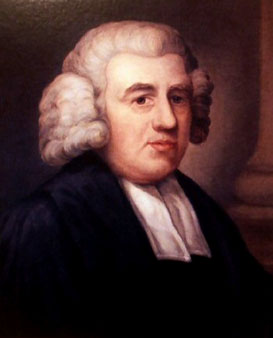
John Newton and Humility


On the plane to England last week, I started reading a biography by Jonathon Aitken called John Newton: From Disgrace to Amazing Grace.  From the introduction on, I have thoroughly enjoyed this book. I love this man, his story, and what God did through him, which was so monumental that it still affects you and me 250 years later. I probably feel as much affection toward John Newton as it is possible to feel toward a dead person whom you've never met.

One of the things I am learning from him is how to cultivate humility. In his personal journals and his public sermons, Newton spoke openly about his struggles with sin. He honestly (sometimes ruthlessly) evaluated himself, his motives, and his actions, often concluding that he was selfish, idolatrous, and foolish. However, John Newton was also convinced that Jesus had paid the penalty for his sins and that he was loved by God. His awareness of his own sin coupled with his firm belief in Christ's sufficiency were the keys to Newton's humility. One of those convictions without the other would have proved disastrous.  His humble heart was the result of a healthy knowledge of his own sin and a deep understanding of God's love. As he said near the end of his life, "I am a great sinner, but Christ is a great savior."

John Newton's example makes me want to be more open about my sins, to glory in them the way Paul did when he wrote, "Therefore I will boast all the more gladly about my weaknesses, so that Christ's power may rest on me...For when I am weak, then I am strong" (2 Cor 12:9,10). I want to pray like this: 
God, I confess I am moody, irritable, impatient, short-sighted, ill-mannered, and I find it hard to say nice things about certain people. I am sorry that I am all of those things, and I am so thankful that your wonderful son, Jesus, went to the Cross, bore my shame, and paid my penalty. Thank you, Father, for sending your Son. Thank you, Jesus, for obeying perfectly. Thank you, Holy Spirit, for revealing these things to me. I have faith in your power to use me and change me. Make me a blessing to you and to the nations.